
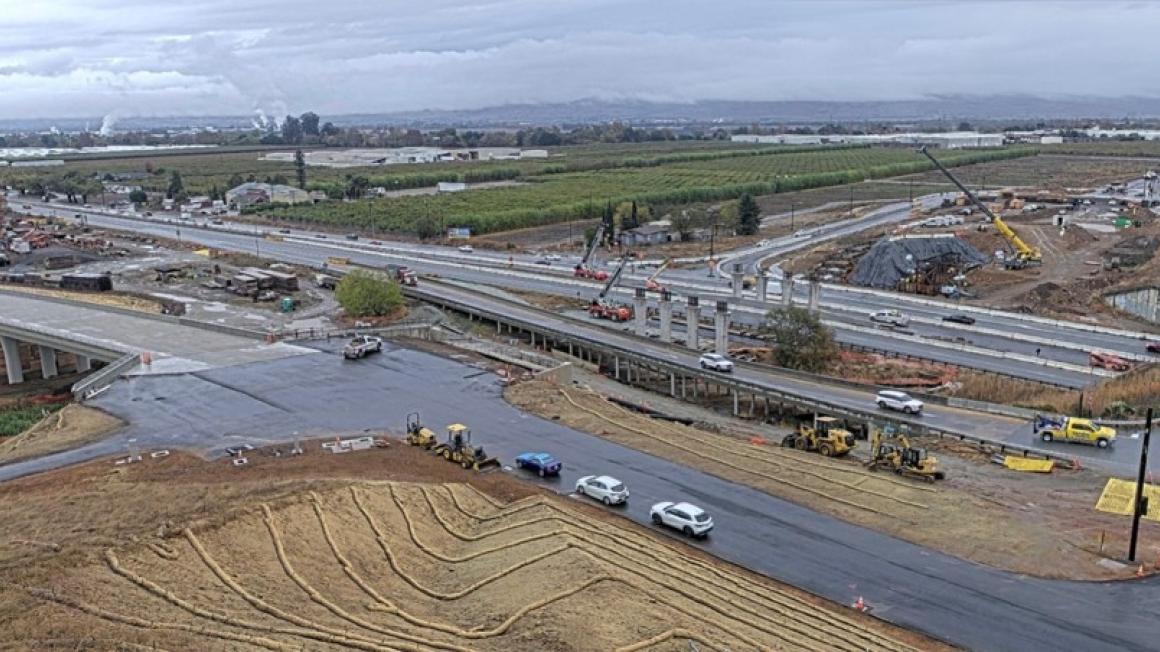
As the rainy season approaches, the US 101/SR 25 Interchange Phase 1 Project team has taken steps to prepare construction areas for heavy rain and potential flooding.
A flood plan has been developed by the team for upcoming construction activities that uses known floodplain mapping and impacts from previous storms to identify ways to reduce potential flooding impacts within the construction area.
One of the biggest priorities is making sure construction activities do not unnecessarily block the paths that floodwater may follow through the area. At the same time, the team has developed a plan to protect construction equipment, materials, and partially completed structures from potential flood damage.
Understanding Flooding in the Area
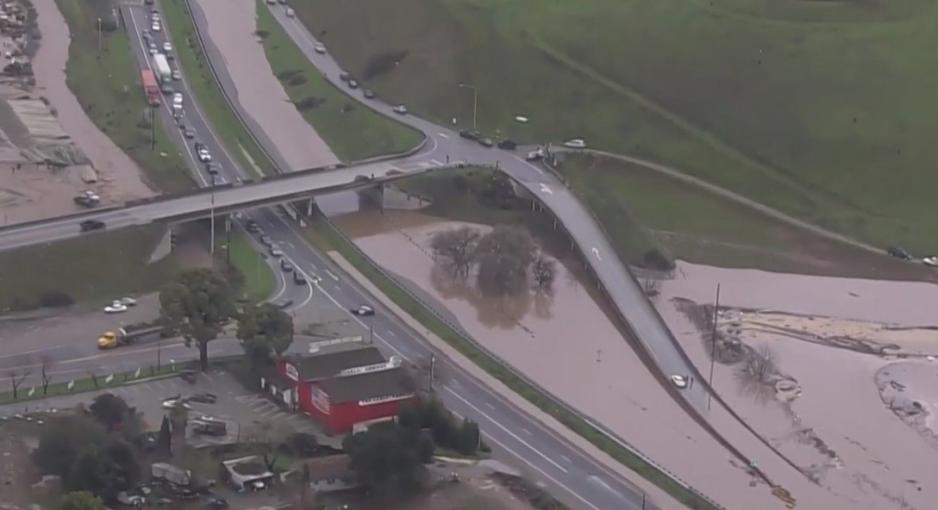
Residents may remember the significant flooding that occurred around the interchange on January 9, 2023. During major storms, floodwater can move from the north toward the east, crossing US 101 before continuing south across SR 25.
The project team uses reports, information and photographs from previous flooding events to better understand where water may travel and how construction activities could affect those pathways.
It is important to understand that the current construction project is not designed to eliminate flooding in this area. However, the team is taking steps to avoid creating additional obstacles that could interfere with the movement of floodwater.
What Is the Project Team Doing to Prepare?
The project team has looked at ways to prepare the construction site before and during the winter storm season.
1. Keeping Paths for Floodwater as Clear as Possible
One important step is removing construction materials and temporary structures that could get in the way of moving water.
The flood plan includes:
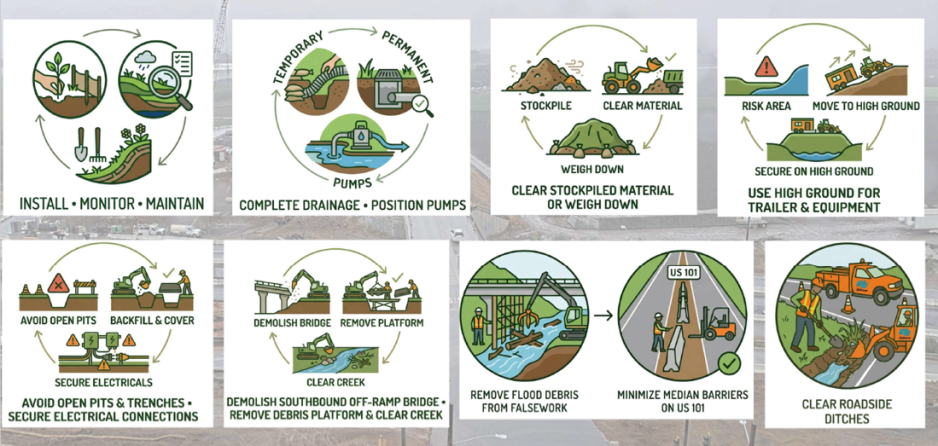
• Remove the existing southbound off-ramp bridge and the temporary platform underneath it.
• Remove or adjust temporary concrete barriers in the construction area where possible.
• Keep large drainage pipes on the east side of US 101 clear of dirt, debris, and construction materials.
• Work with Caltrans to make sure nearby drainage ditches downstream are clear.
• Complete permanent and temporary drainage work before the heavy rains begin.
2. Moving Equipment and Materials Out of Potential Flood Areas
Heavy rain and flooding can damage construction equipment and carry away loose materials, potentially creating additional hazards.
When significant rainfall is expected, the contractor will prepare to move equipment and materials to higher ground.
Other preparations include:
• Moving construction equipment and trailers away from areas where floodwater may travel.
• Removing loose materials and supplies that could be carried away by floodwater.
• Moving fuel, chemicals, and other potentially hazardous materials to safer locations.
• Securing materials that must remain onsite.
3. Protecting Construction Areas and Unfinished Work
Some parts of the interchange will still be under construction during the winter months. This means there may be unfinished foundations, open trenches, exposed electrical equipment, and other work areas that need protection.
The team has planned ways to protect these areas, including:
• Covering open holes and trenches.
• Protecting exposed metal bars and unfinished concrete foundations.
• Securing electrical wires and equipment.
• Protecting exposed dirt and slopes.
• Using materials such as hydro-mulch, hydro-seed and fiber rolls.
• Making sure drainage systems remain clear.
These steps will help protect the construction site and reduce the amount of dirt and debris that could wash into nearby drainage areas.
4. Watching Weather Forecasts and Preparing Ahead of Heavy Rain
The project already has a procedure in place for moving equipment when significant rainfall is expected.
For example, when the weather forecast calls for specified amounts of rain within 72 hours, the contractor must remove mats from the temporary construction creek crossing to prevent materials from floating away. The team is using this existing requirement to develop additional procedures for the entire construction site.
5. Planning for Cleanup After a Flood
Preparing for flooding also means knowing what to do after the water recedes.
The project team has developed a cleanup and inspection plan that includes:
• Removing standing water from low-lying construction areas with pumps on-site.
• Clearing mud, dirt, and debris from the construction site.
• Checking for possible contamination from fuel, chemicals, or other hazardous materials.
• Inspecting bridge foundations, raised roadway areas, and other structures for damage.
• Checking electrical equipment before it is used again.
• Locating drainage openings, utility connections, and other important features that may have been covered by water or mud.
Working With Regional Partners
Flooding can affect more than the construction site. It can also impact nearby roads, drainage systems, and travel throughout Gilroy and South County.
VTA's project team is coordinating with Caltrans and other responsible agencies to address potential drainage problems and debris that could affect the movement of water beyond the construction area.
Staying Informed and Staying Safe
VTA recognizes that flooding is a concern for Gilroy residents, South County commuters, and everyone who travels through the US 101/SR 25 interchange.
Preparing the construction site is one way the project team can help reduce potential problems during the rainy season. While these efforts are intended to keep construction activities from unnecessarily interfering with the movement of floodwater, they cannot prevent flooding or replace larger regional flood-control improvements.
During periods of heavy rain, residents and commuters should continue to monitor local weather forecasts, emergency notifications, and road conditions. Never drive through flooded roadways.
VTA and its project partners will continue monitoring the winter storm season while working to improve the US 101/SR 25 interchange for the South County community.
For questions or community outreach assistance, call VTA Community Outreach at (408) 321-7575 or email community.outreach@vta.org.